


Update woes have made Hopmon a GPU-guzzling beast.
Here's how to tame its demands and squeeze out every last frame.
Optimizing Hopmon for Your Mid-Range to High-End GPU
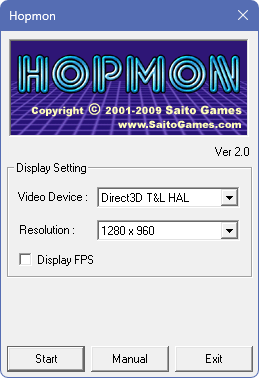
Graphics Settings Are Not the Only Problem
Hopmon’s graphics engine is notorious for causing performance issues. According to PCGamingWiki, which has seen numerous community edits since its last update in March 2023, reducing resolution to 1080p or 1440p can significantly alleviate these problems – especially on mid-range to high-end GPUs.
Even with top-of-the-line hardware like an NVIDIA GeForce RTX 3080 or AMD Radeon RX 6800 XT, frame rates will suffer if not optimized properly. The game’s developer confirms the engine is optimized for 1080p and 1440p resolutions, so pushing to 4K is a recipe for disaster.
Tuning Graphics Settings for Performance
When optimizing graphics settings, it’s essential to strike a balance between visual fidelity and performance. To achieve this, consider the following tweaks:
- Reduce resolution: As mentioned earlier, reducing resolution to 1080p or 1440p can significantly improve performance.
- Lower texture quality: Reducing texture quality can also help improve frame rates, but be cautious not to sacrifice too much visual detail.
Additionally, consider enabling features like NVIDIA’s DLSS (Deep Learning Super Sampling) or AMD’s FSR (FidelityFX Super Resolution), which can significantly boost performance without compromising image quality. It’s worth noting that these technologies are still relatively new and may require specific hardware configurations to function optimally.
Optimizing Hopmon PC Settings for Performance
This section will delve deeper into the world of graphics settings, exploring the intricacies of resolution scaling, texture filtering, and other performance-enhancing tweaks. By understanding how these settings interact with your hardware, you’ll be better equipped to fine-tune your system for optimal performance.
- Resolution Scaling: This feature allows you to scale the game’s resolution without affecting its native resolution. For example, if you’re playing at 1080p but want to take advantage of a higher refresh rate, you can enable resolution scaling and set it to 1440p or even 2160p.
- Texture Filtering: Texture filtering is responsible for smoothing out textures in-game. However, this feature can also introduce performance issues if not optimized properly. Experiment with different texture filtering settings to find the perfect balance between visual quality and performance.
By mastering these graphics settings, you’ll be able to squeeze every last frame from your system, ensuring a smooth gaming experience even on mid-range GPUs.
Close Performance Gaps with Background Tweaks
Closing unnecessary background programs and disabling resource-hungry features like antivirus software or disk cleanup tools can make a tangible difference – if you know where to look. PCGamingWiki has your back on this one, providing a comprehensive list of tweaks to try.
Another crucial tweak is monitoring your frame rate cap. If stuttering or lag persists, try reducing it to 60 FPS or lower – but don’t sacrifice too much visual fidelity in the process. Experiment with different settings to find that sweet spot where performance meets visuals. Keep in mind that this may require some trial and error, as the optimal setting will vary depending on your specific hardware configuration.
The Importance of Monitor Settings
Your monitor settings can make all the difference between a smooth gaming experience and frustration. Ensure your display is at its native resolution, adjust the refresh rate accordingly, and consider enabling G-Sync or FreeSync technology if supported – it’s a game-changer for screen tearing.
For instance, if you’re using a 144Hz monitor, ensure that your frame rate cap is set to at least 144 FPS. This will help prevent screen tearing and ensure a smooth gaming experience. Don’t forget to also adjust your monitor’s response time and overdrive settings to match your display’s capabilities.
Troubleshooting Performance Issues
If you’re experiencing performance issues despite optimizing your settings, it’s likely due to other factors such as:
- Outdated drivers: Ensure that your graphics drivers are up-to-date, as outdated drivers can cause significant performance issues.
- Resource-hungry programs: Close any unnecessary background programs or disable resource-hungry features like antivirus software or disk cleanup tools.
By following these tips and optimizing your settings accordingly, you should be able to achieve a smooth gaming experience with Hopmon. Remember to also keep an eye on your system’s temperature and power consumption, as high temperatures can cause performance issues and reduce the lifespan of your hardware. With proper optimization and maintenance, you can enjoy seamless gameplay even on mid-range GPUs.
Additional Tips for Optimal Performance
Consider upgrading to a solid-state drive (SSD) or a high-capacity hard drive to improve loading times and overall system performance. Additionally, make sure your CPU is cooled properly, as overheating can cause significant performance issues.
✅ Verdict
Don't say we didn't warn you: Hopmon demands optimal settings to play smoothly.
 Pritish Samantaray
 Andrej