

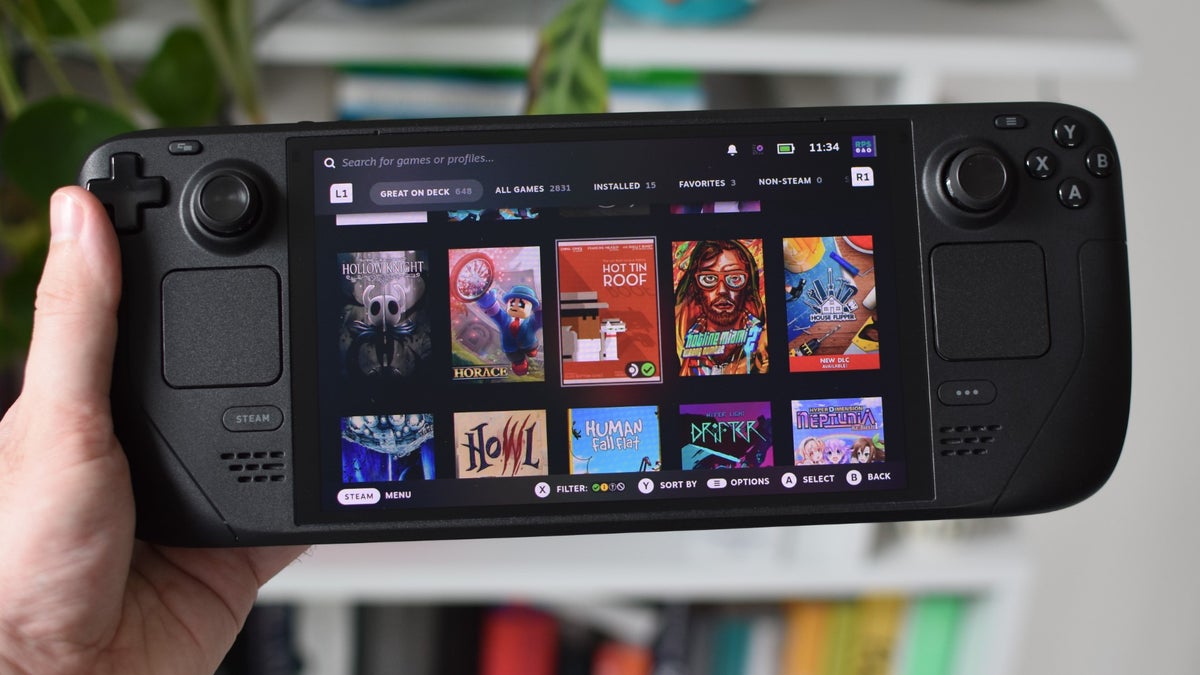
Memory chip shortages have led to a scarcity of PC games hardware.
The Steam Deck OLED is now back in stock at an astonishingly high price.
This marks a 62% increase from its previous $399 base model price, now sitting at $649.
The Impact of Price Hikes on the Steam Deck OLED
Steam Deck OLED: No Longer a Bargain
The base model’s price hike is nothing short of drastic, with the Steam Deck OLED now priced at $649. This represents a 62% increase from its previous $399 base model price, making it less appealing to PC gamers on a budget.
This significant price jump has left many wondering if the Steam Deck OLED still offers good value for money. The answer lies in understanding what factors contributed to this price hike and how it will impact the gaming community.
No Spec Changes Despite Price Jump
Despite the substantial increase, Valve hasn’t altered the device’s specifications or features. The performance remains unchanged, which raises questions about the justification for the price hike. Was it solely due to market demand, or were there other factors at play? For example, the increased cost of memory chips could be a contributing factor.
It’s worth noting that the Steam Deck OLED was already a premium product, but the price hike makes it even more expensive than its competitors. This could lead to a shift in consumer behavior, with gamers opting for more affordable options that offer similar performance and features.
The Shift in Value Proposition
The price hike poses a tough decision for PC gamers considering purchasing the Steam Deck OLED. It may no longer be the best value compared to its competitors, including high-end gaming laptops that offer superior performance and features.
One of the key factors to consider is the value proposition of the Steam Deck OLED in relation to other gaming devices on the market. For instance, the non-OLED Steam Deck model offers an excellent gaming experience at a lower price point of $399. Razer and ASUS also provide competitive products that might just offer superior performance and features for less cost.
Alternatives Worth Exploring
The non-OLED Steam Deck model offers an excellent gaming experience at a lower price point of $399. Razer and ASUS also provide competitive products that might just offer superior performance and features for less cost. For example, the Razer Blade 15 is a popular choice among gamers, offering a powerful Intel Core i7 processor, NVIDIA GeForce RTX 3080 graphics card, and up to 64GB of RAM.
Impact on PC Gamers
The price hike will undoubtedly affect PC gamers who were considering purchasing the Steam Deck OLED. Some may opt for alternative devices or wait for a potential price drop in the future. Others may choose to look elsewhere, such as the non-OLED Steam Deck model or other gaming laptops.
It’s worth noting that the Steam Deck OLED was already a premium product, but the price hike makes it even more expensive than its competitors. This could lead to a shift in consumer behavior, with gamers opting for more affordable options that offer similar performance and features.
The Future of PC Gaming
The Steam Deck OLED price hike is just one example of the challenges facing the PC gaming industry. As technology advances and prices rise, gamers may need to adjust their expectations and consider more budget-friendly options. This could lead to a shift in the market, with gamers opting for more affordable hardware that still offers great performance.
This trend is not unique to the Steam Deck OLED, as many other PC gaming devices are also experiencing price hikes due to increased production costs and component shortages. However, this does not necessarily mean that gamers will have to compromise on performance or features.
✅ Verdict
Buy it only if you're willing to pay the premium, but consider alternatives for better value.
 Jakeyy
 Andrej
 Olatunde-Bada